Atacama Starlight & Geological Solitude
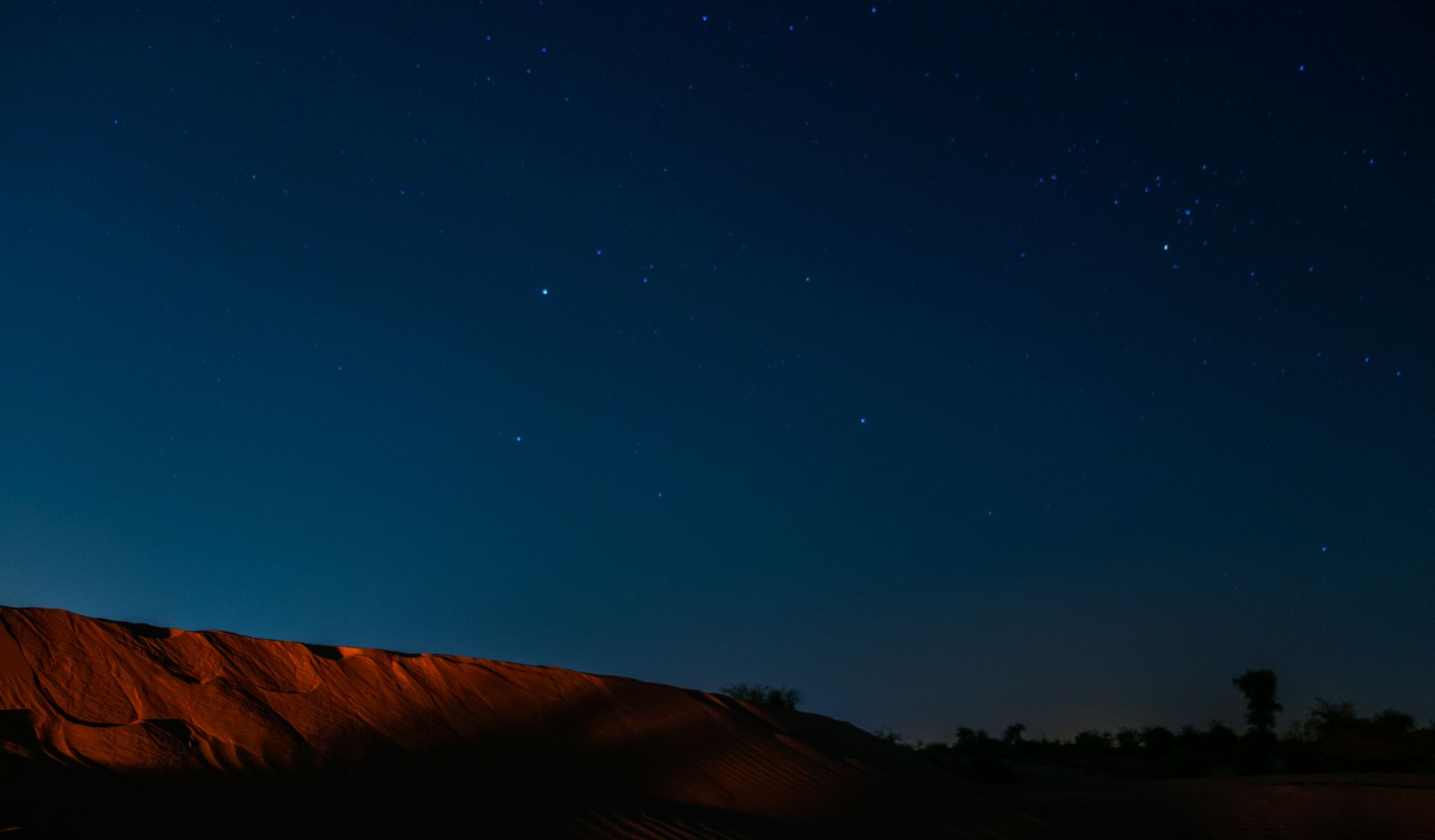
Locked between the Chilean Coastal Range and the towering wall of the Andes, the Atacama is a mineral cathedral stripped of all planetary deception.
There are geological basins in the core of this desert where rain has not fallen in recorded meteorological history. The air contains almost zero moisture, creating an optical clarity so sharp that mountain peaks fifty kilometers away seem within arm's reach. As daylight softens, the rust-red clay of Valle de la Luna shifts through lilac, burnt ochre, and deep cobalt.
The Canopy of the Southern Hemisphere
When darkness finally blankets the altiplano, the terrestrial landscape recedes, and the cosmos claims dominance. The lack of artificial illumination and the high elevation make the Atacama the premier astronomical observatory site on Earth.
Looking up without binoculars, the Milky Way is not a faint cloud, but a dense, three-dimensional river of luminous dust and diamond clusters. The Magellanic Clouds—satellite galaxies orbiting our own—glow as distinct nebular islands. For the ancient Atacameño astronomers, the constellations were traced not only across bright star points, but inside the dark cosmic dust lanes, recognizing the celestial Llama and Serpent.
Essential Travel Considerations
- Altitude Adaptation: Spend two initial days in San Pedro de Atacama (2,400m) before ascending to geysers above 4,000m.
- Hydration & Skin Protection: High UV indices and dry air require rigorous mineral sunscreen and natural oils.
- Dark Sky Etiquette: Only use red-spectrum torches during nighttime observational walks to protect nocturnal vision.
Flamingos and Salar Crusts
South of San Pedro lies the Salar de Atacama, an immense crust of dried mineral salts covering three thousand square kilometers. In the turquoise Laguna Chaxa, Andean and James's flamingos forage peacefully on microscopic brine shrimp, their feathers providing vivid contrast against the blinding white salt geometry.
Standing at the edge of this prehistoric lake as the wind whispers through salt prisms, a traveler understands the rare gift of desert isolation: the opportunity to feel inconsequential in the grand tapestry of geologic time.
Discover Desert Astronomy with 111111
Our specialized desert expeditions pair discerning travelers with astrophysicists and private field camps.
Request Expedition Plan